(No Country Before Our Time)
I have long been preoccupied with the madness of the human mind — its capacity to invest its power, intelligence and energy in its own destruction. For me, this includes — alongside Verdun and Hiroshima — the Third Reich and the Holocaust as central, formative events in our history.
Wrapped in the packaging of memorials and days of remembrance, speeches and wreath-laying ceremonies, the reality of the Third Reich, the persecution of the Jews and the terror of that era often appear abstract. The places and routes of everyday life appear detached from the past, the individual released from any responsibility to remember, to engage with that past, and to develop a position of one's own. And yet these events did not happen ‘somewhere else’ — they happened here, in our midst. Nor did they happen in some distant past: their traces are still visible to anyone who walks through the city with open eyes.
Wrapped in the packaging of memorials and days of remembrance, speeches and wreath-laying ceremonies, the reality of the Third Reich, the persecution of the Jews and the terror of that era often appear abstract. The places and routes of everyday life appear detached from the past, the individual released from any responsibility to remember, to engage with that past, and to develop a position of one's own. And yet these events did not happen ‘somewhere else’ — they happened here, in our midst. Nor did they happen in some distant past: their traces are still visible to anyone who walks through the city with open eyes.
I want to resist forgetting and anchor the warning voice of memory more firmly in everyday life — not as a moralizing gesture, but as an invitation to develop one’s own perspective on the events of the National Socialist era and on what they demand of us as individuals today.
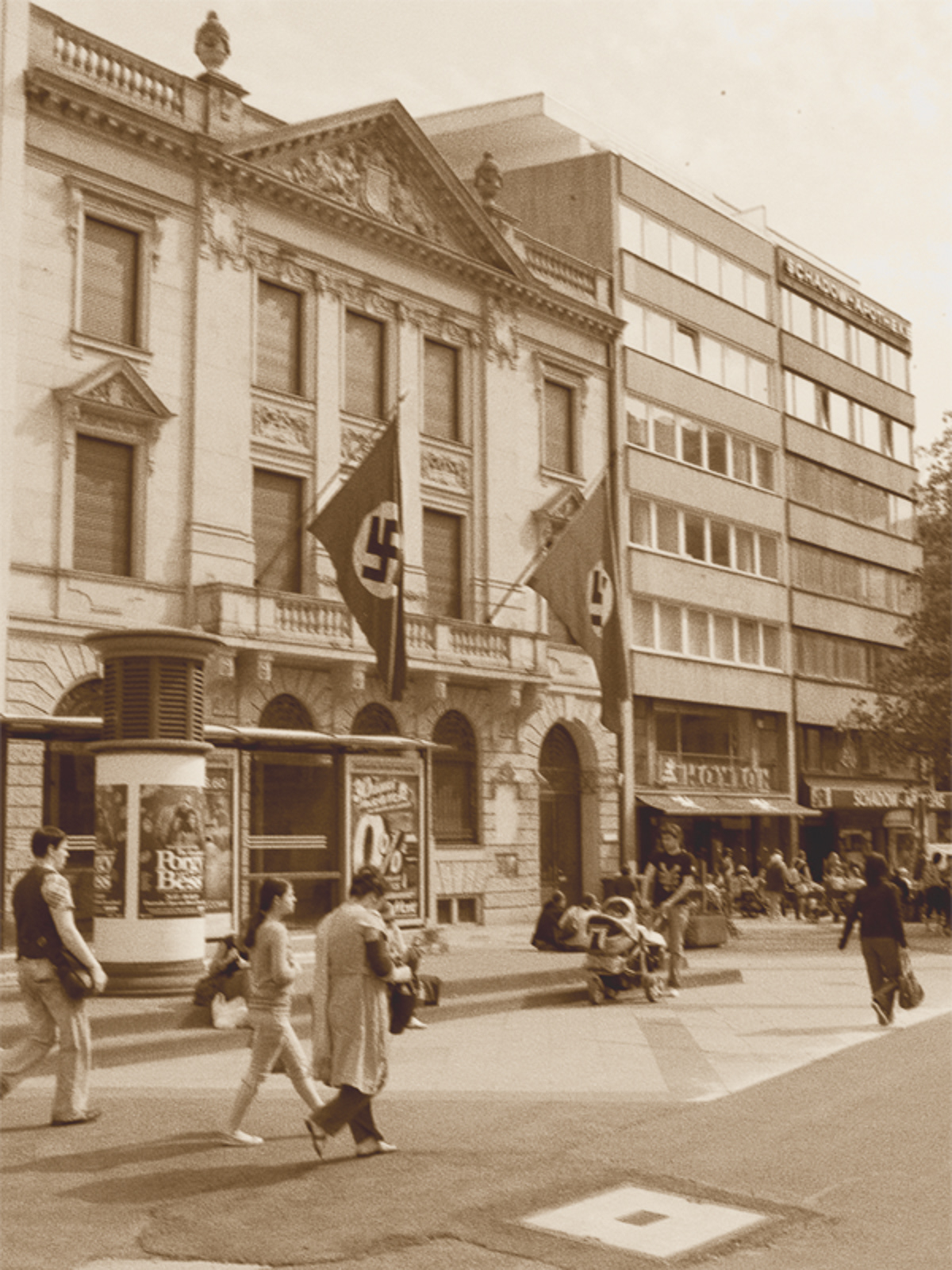
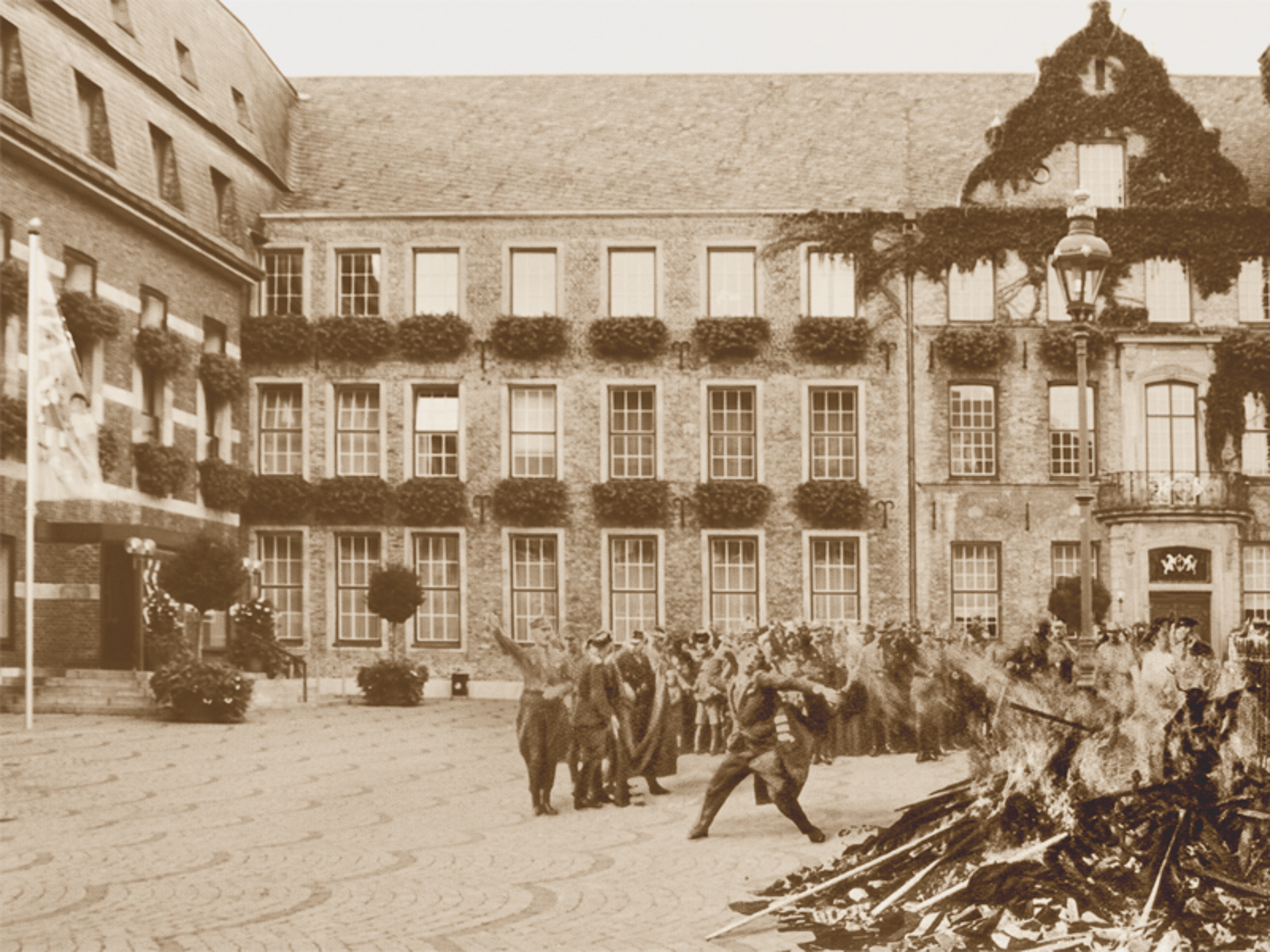
I have been grappling with the difficulty of capturing and representing, through visual means, the shadows cast by the past. At first encounter, a purely visual contemporary reflection — whether of the Killing Fields in Cambodia or the battlefields of the Somme — will remain inherently abstract. To achieve an emotional resonance, we have to know of the associated historical events — whether acquired through narrative or personal memory.
Eyewitnesses, returning to a historical site, will see again before their eyes what they once witnessed, fused with the scene of today. This is what I wanted to harness in my work, and to recreate anew for the viewer.
Drawing on the documents and materials of the Mahn- und Gedenkstätte Düsseldorf (Memorial and Documentation Centre) to dive into the local history of Düsseldorf during the Third Reich it became quickly apparent how central the city had been during that time. Working my way through the photographic holdings of the Düsseldorf City Archive and the Centre for Media and Education of the Rhineland Regional Council -- and supported by long conversations with Prof. Kurt Düwell (Historian and Emeritus Professor in the Department of History at the University of Düsseldorf, formerly Chair of Modern History) -- I searched for scenes with a high degree of recognisability in Düsseldorf city centre. Whilst many photographs survive from the pre-war years — a period when photography was more freely practised — the holdings become very sparse with the onset and progression of the war, presumably because materials grew scarcer and the pressure not to draw attention to oneself steadily increased.
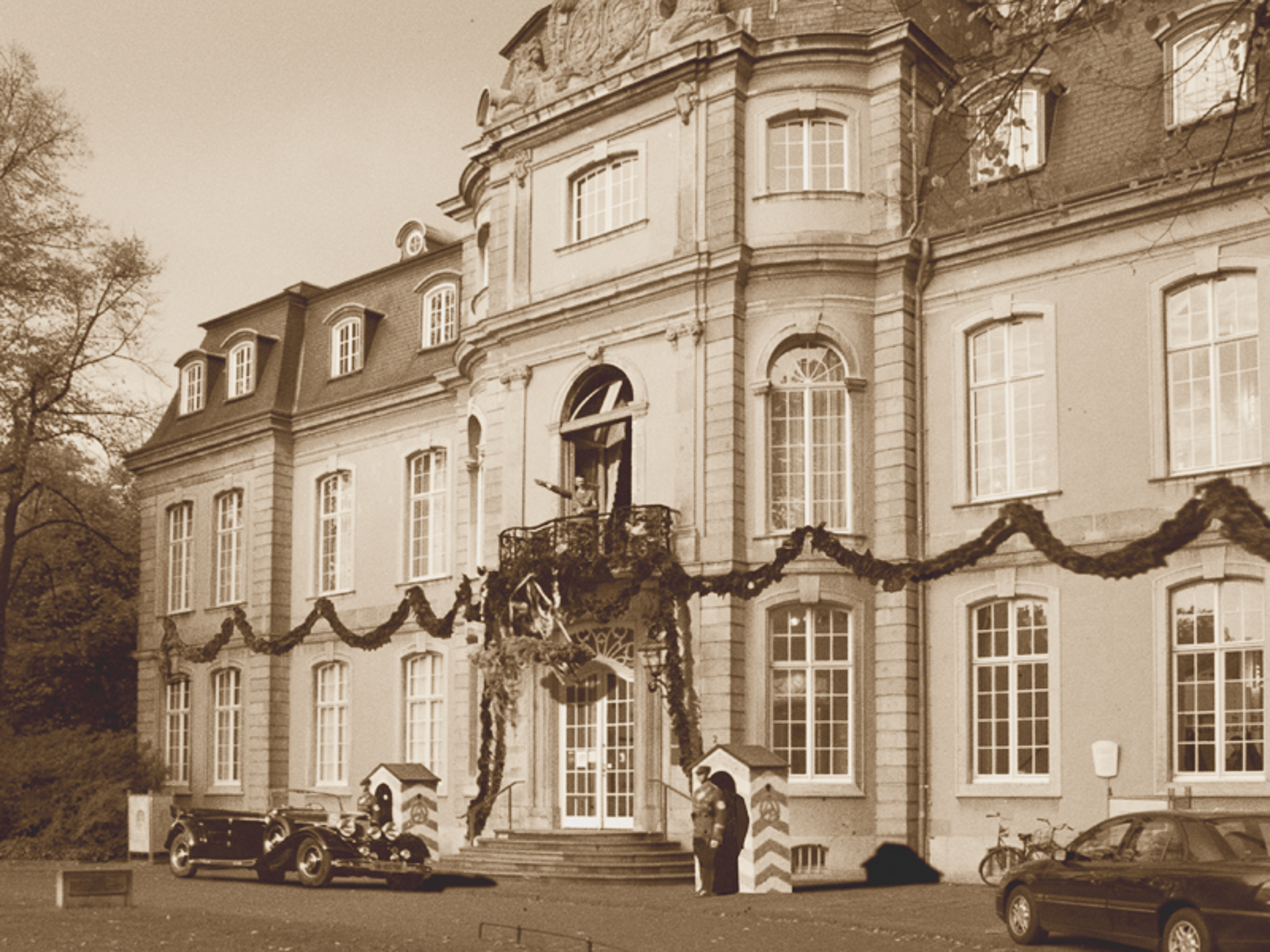
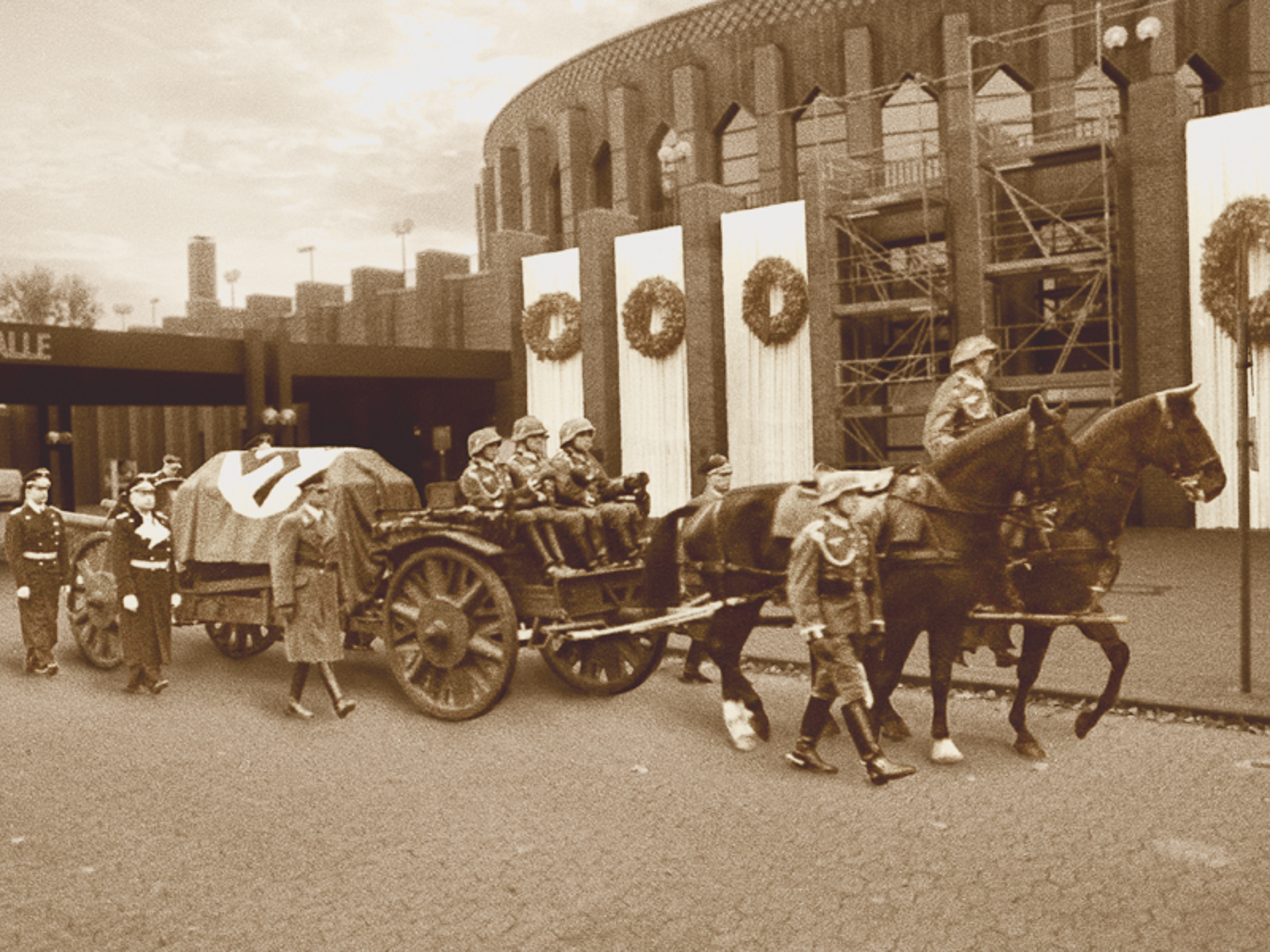
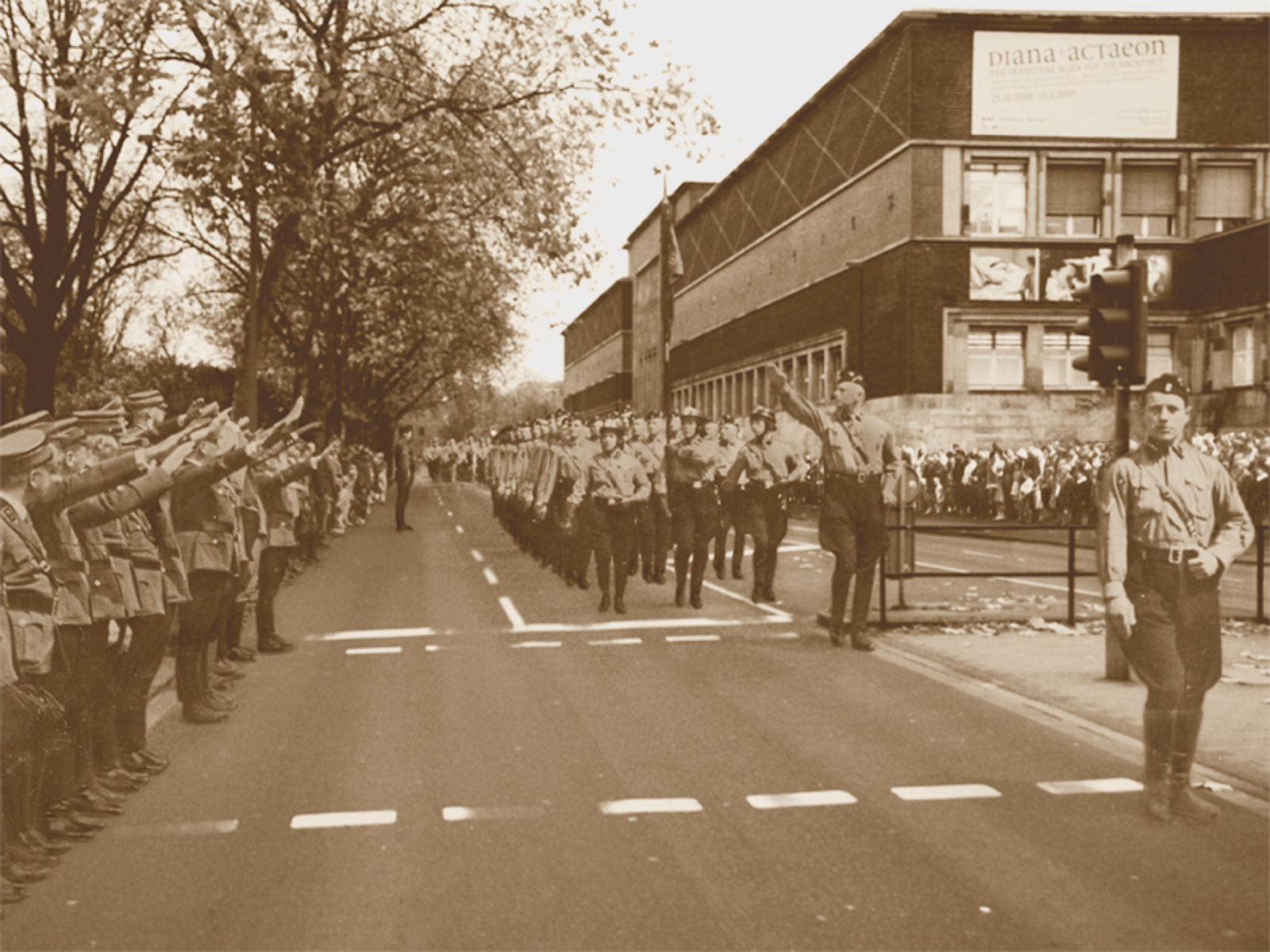
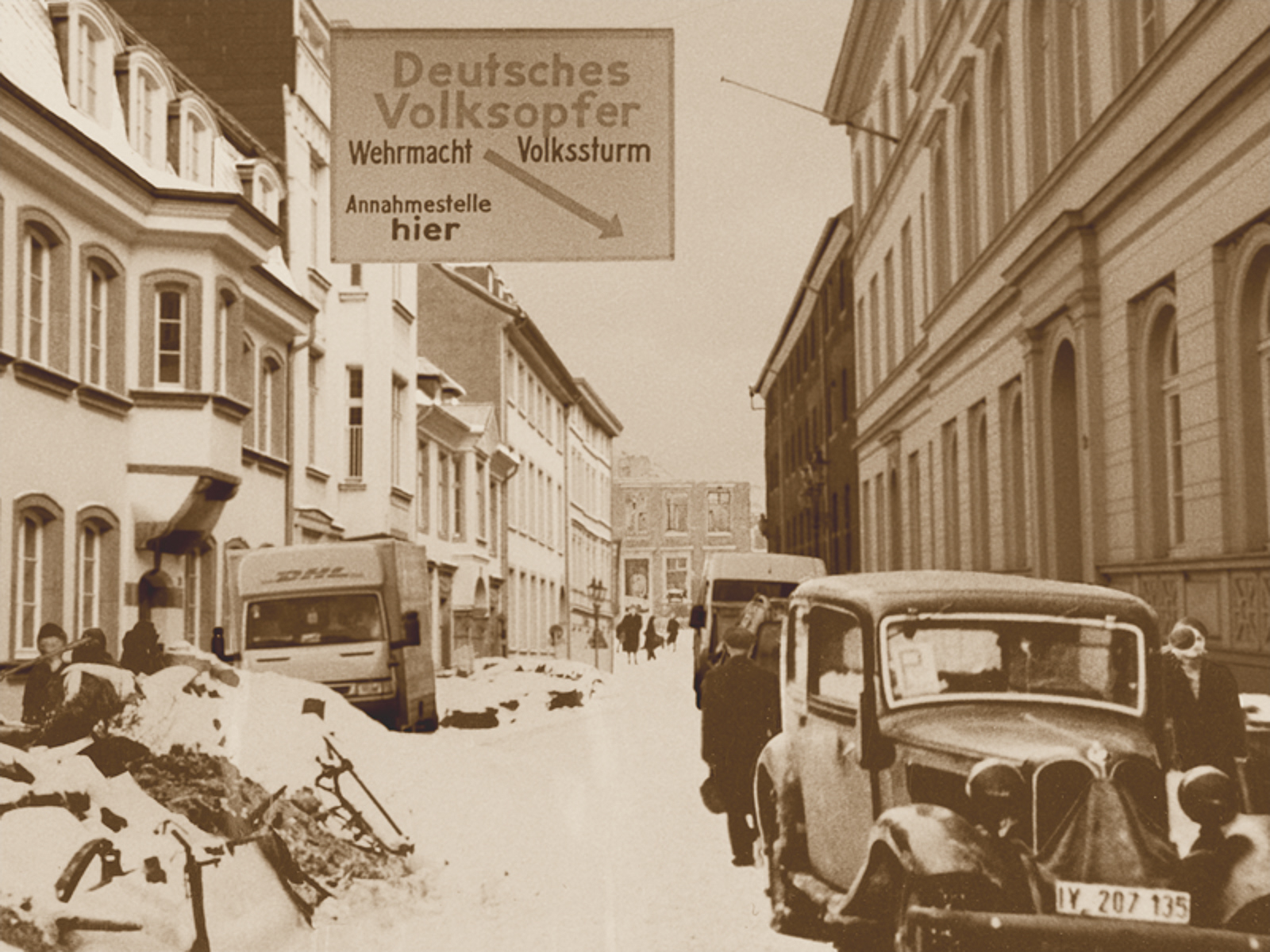
Ultimately I selected eight photographs: Citadellstraße (link) with a call to the Volkssturm; a book burning on the market square outside the Town Hall (link); the main railway station (link) plastered with election posters; Schloss Jägerhof (link) during a visit by Hitler; a parade in front of what is now the NRW Forum (link); the funeral ceremonies for the murdered Ernst vom Rath outside the Rheinhalle (now the Tonhalle) (link); Schadowplatz (link) with the former Schliep banking house; and the Wilhelm-Marx-Haus (link), likewise adorned with election posters.
For each of these photographs, I reconstructed the original shooting situation as faithfully as possible, despite subsequent architectural changes, and took my own images from the same perspective and position.
The historical photographs are each overlaid with my own images from 2008 and 2009. Through the deliberate treatment of the results as "old" photographs, the historical frame of reference is preserved — or rather, re-established — whilst the recognisably modern elements simultaneously disturb the viewer's sense of temporal distance, compelling them to pause and to reflect beyond the immediate moment.
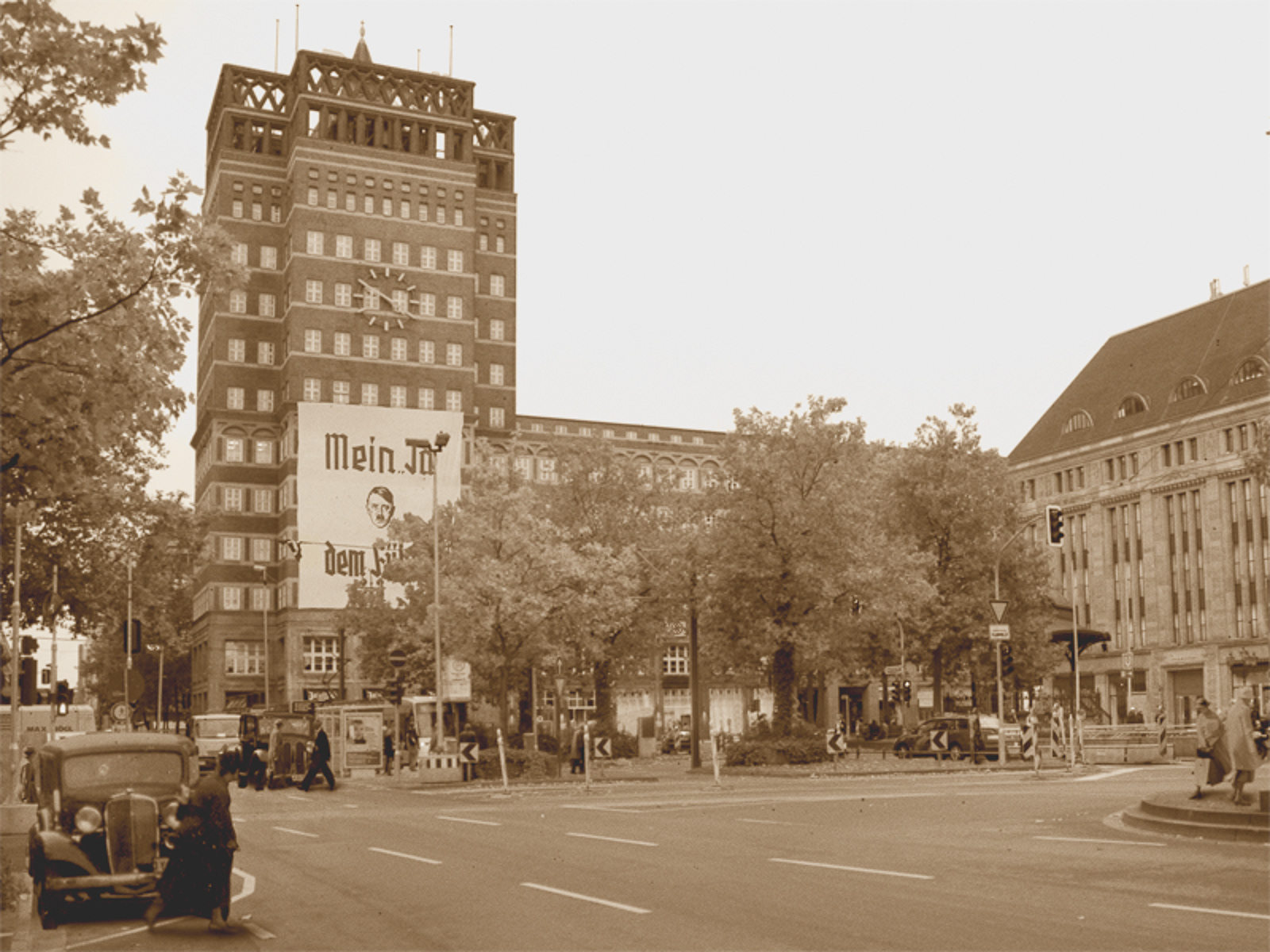
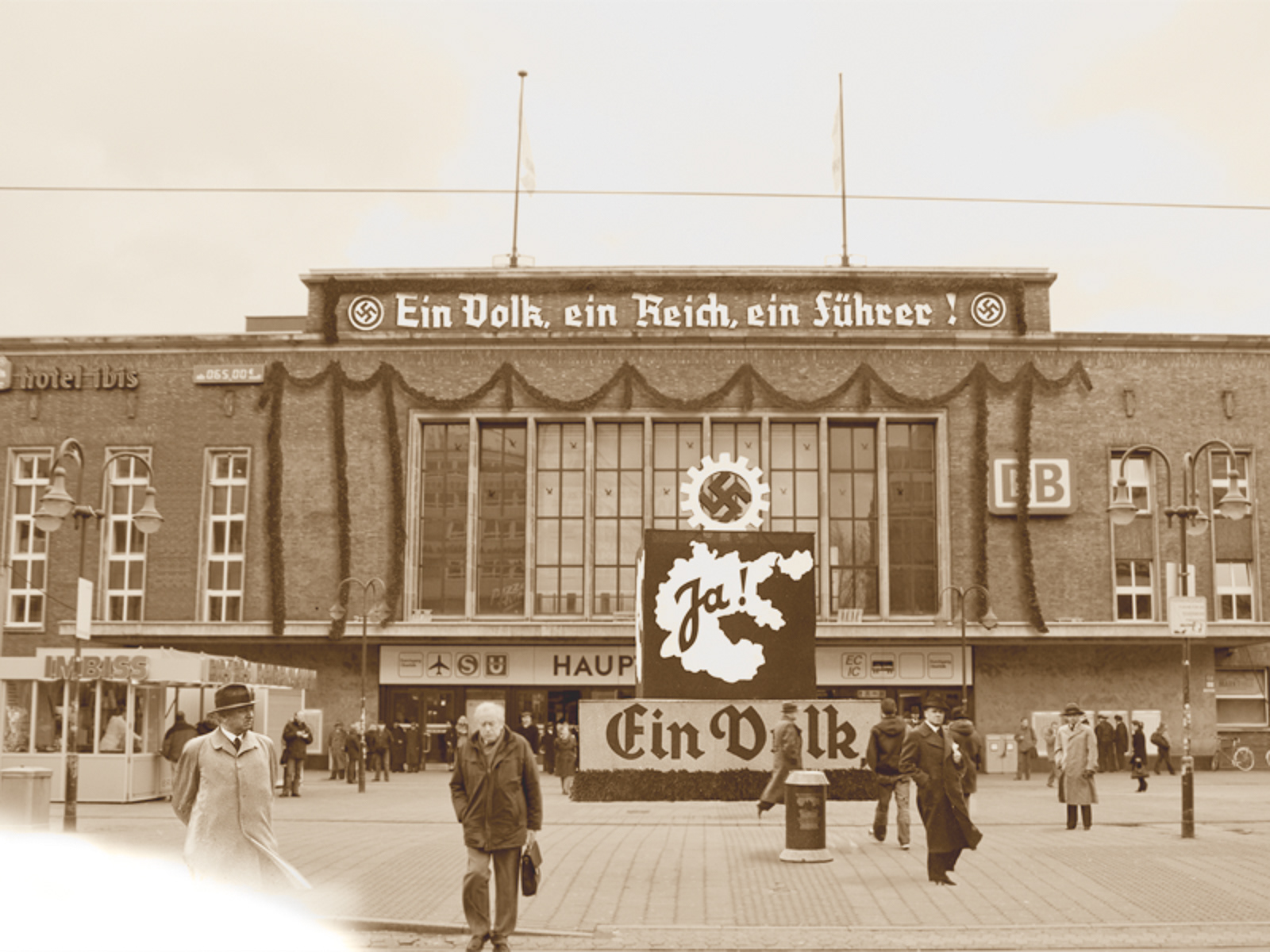
This work was exhibited in Johanneskirche Düsseldorf as part of the "Kristallnacht" November Pogrom commemorations of the Gesellschaft für Christlich-Jüdische Zusammenarbeit (Society for Christian-Jewish Cooperation) in 2010. Professor Kurt Düwell, historian and (emeritus) professor of contemporary history at the Historical Institute of Düsseldorf University, generously introduced the presentation with a brief opening lecture.
I am grateful for the generous support of Johanneskirche and the Society for Christian-Jewish Cooperation; Professor Düwell for his time, suggestions and guidance; the Düsseldorf City Archive and the Centre for Media and Education of the Rhineland Regional Council for granting the rights to use the underlying historical photographs.